
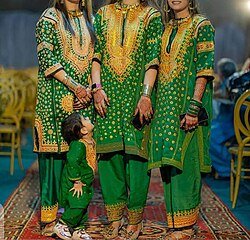
Sindhi traditional dress embodies the rich cultural tapestry of the Sindh region, spanning parts of Pakistan and India, with roots tracing back to the ancient Indus Valley Civilization. Characterized by intricate embroidery, vibrant colors, mirrorwork, and distinctive patterns like ajrak and bandhani, these garments serve not only as clothing but as symbols of identity, social status, marital standing, and regional affiliations. From everyday wear to festive ensembles, Sindhi cultural dress reflects a blend of historical influences, tribal variations, and Sufi traditions, adapting over time while preserving artisanal craftsmanship. This article explores the key elements of Sindhi dress for girls, women, men, and broader cultural contexts, drawing on historical and contemporary practices.
Historical Evolution of Sindhi Dress
The evolution of Sindhi traditional attire mirrors societal changes, from pre-colonial styles to modern adaptations. A century ago, women’s clothing included the white cotton “cholo” (shirt) paired with a thick “paro” (lower garment) featuring black-block prints, while younger females favored “suthan” (pyjamas) or “jablo” (long skirts) with “koti” blouses. Men’s attire centered on the “dhoti” or “godd” with “jamo” upper garments and white turbans. By the mid-20th century, influences like the shalwar kameez and sari became prevalent, especially among urban and Hindu communities, blending comfort with elegance. Today, while modern outfits dominate, traditional Sindhi dress persists in rural areas, festivals, and cultural events like Sindhi Cultural Day, celebrated on the first Sunday of December with rallies, music, and unified attire to promote heritage and unity.
Sindhi Traditional Dress for Women and Girls

group of Sindhi girls in traditional clothes
Sindhi dress for girls and women is renowned for its opulence, featuring rich fabrics such as velvet, satin, silk, and brocades in bright hues like red, pink, maroon, and blue for younger or married individuals, shifting to pastels or white for elders and widows. Key garments include:
- Lehenga/Ghagra Choli: The foundational Sindhi cultural dress female, consisting of a wide skirt (ghagra or jablo) paired with a choli blouse. In regions like Tharparkar, it features heavy embroidery with mirrors, sequins, and beads. Often accompanied by a long veil (rao or chadar) for modesty.
- Sindhi Suthan and Cholo: A pleated lower garment (suthan or chareno) tight at the ankles, made from suss i fabric, paired with a loose tunic (cholo) reaching the knees. Embellished with metallic drawstrings (aggath) and ankle embroidery (pācha), this Sindhi dress for girls and women symbolizes elegance and is worn with a dupatta for head coverage. Variations like the “sorhi suthan” resemble churidar pyjamas.
- Other Variants: The “julaba” (hooded robe), “jubo” (thobe-like dress), or “fairaq” (frock-style) in southern Sindh, often with “gaj” embroidery—a dense mirrorwork pattern covering the front, taking months to craft and integral to wedding dowries.
Accessories enhance the Sindhi culture dress female, including large bangles, nose pins (nath), anklets, and embroidered footwear like jutti or khusso. On Sindhi Cultural Day, women and girls opt for Ajrak-printed kurtas or traditional dresses, fostering cultural pride.
Sindhi Traditional Dress for Men
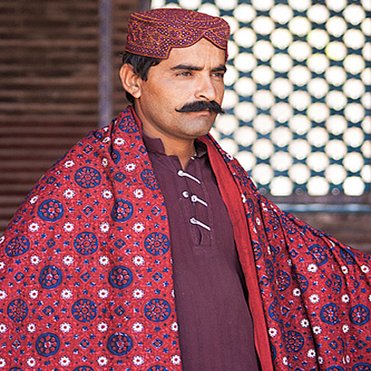
Man in traditional Sindhi attire with Ajrak and Topi
Sindhi dress male emphasizes functionality and symbolism, using cotton for the region’s climate, with embroidery and mirrorwork. Traditional ensembles have transitioned to kurta with suthan or salwar, but retain distinctive elements.
- Sindhi Suthan/Salwar and Pehran: Loose pants (suthan or kancha) tied with ornate drawstrings, paired with a collarless tunic (pehran or angelo). Rural men favor the “godd” (sarong) or “dhoti.”
- Outerwear and Headgear: The iconic Ajrak shawl, block-printed in maroon and indigo, draped over shoulders as a symbol of Sindhi heritage. Headwear includes the Sindhi topi (embroidered skullcap with mirrors) or patko turbans in ajrak fabric, associated with Sufi saints. Waistcoats (sadri) and sherwanis add formality.
For Sindhi Cultural Day, men wear black kurta shalwar with Ajrak and topi, accessorized with rings and sandals, promoting a royal, unified look.
Cultural Significance and Modern Adaptations
Sindhi dress male and female transcends mere apparel, embodying Sufi values, tribal identities, and artisanal legacy. Patterns like ajrak, gifted as tokens of respect, and gaj embroidery highlight craftsmanship passed through generations. In contemporary settings, traditional elements integrate into everyday wear, such as Ajrak prints on shalwar kameez, ensuring cultural continuity amid globalization. Events like Sindhi Cultural Day reinforce this heritage, uniting communities in vibrant displays of pride and inclusivity.